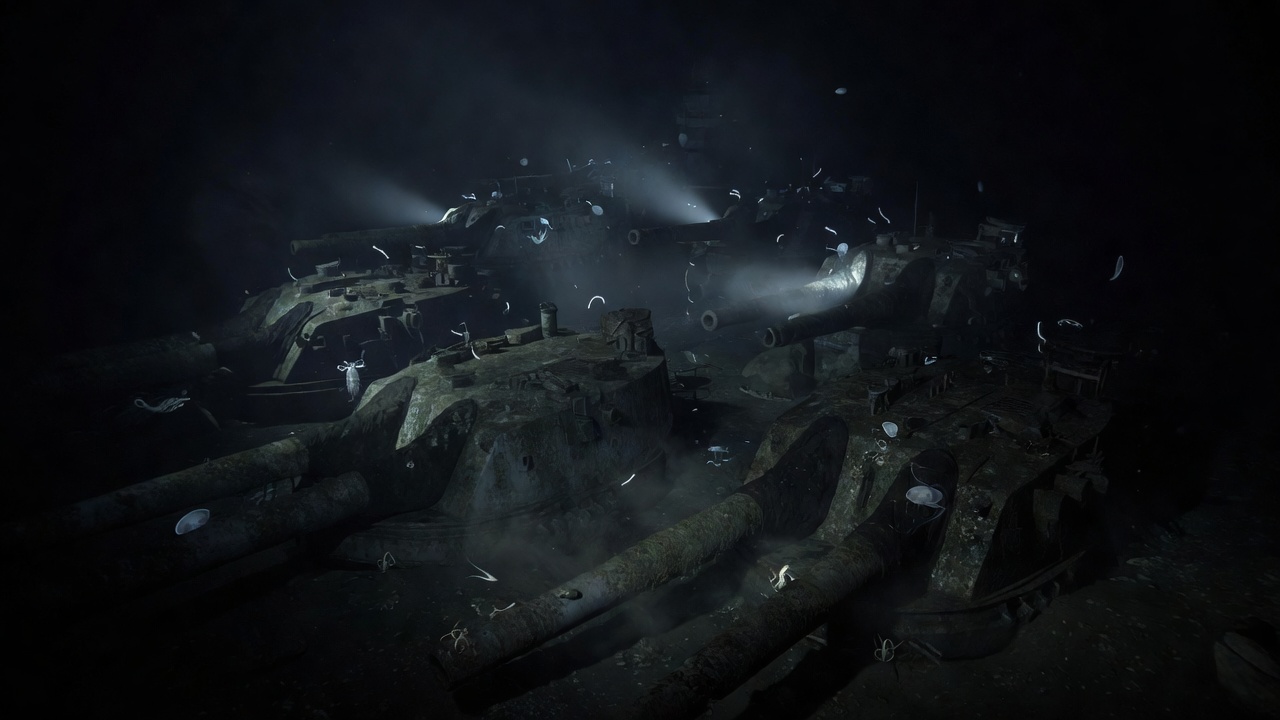
The loss of the heavy cruiser USS Indianapolis (CA-35) stands as the single greatest loss of life at sea from a single ship in the history of the US Navy. Her story is one of high-stakes wartime secrecy, a catastrophic torpedo strike, and a grueling test of human endurance in the open waters of the Philippine Sea.
Portland-class Specifications
Commissioned in 1932, the Indianapolis was a Portland-class heavy cruiser built to adhere to the weight limitations of the Washington Naval Treaty. This meant she lacked heavy armor plating compared to battleships, relying instead on speed and heavy firepower. She was powered by eight White-Forster boilers and four Parsons reduction steam turbines, allowing her to reach speeds of nearly 33 knots.
Vessel Specifications
- Displacement: 9,800 tons (standard)
- Armament: Nine 8-inch/55 caliber guns in three triple turrets, eight 5-inch anti-aircraft guns.
- Armor: Belt armor ranged from 3.25 to 5 inches, notoriously light for a heavy cruiser.
The Secret Mission and the Sinking
In July 1945, the Indianapolis completed a top-secret, high-speed transit from California to Tinian island, delivering crucial components and enriched uranium for "Little Boy," the atomic bomb destined for Hiroshima. Because of the extreme secrecy of the mission, her route and schedule were not widely broadcast across the Pacific command.
After delivering the cargo, she departed for Leyte. Shortly after midnight on July 30, 1945, she was intercepted by the Japanese submarine I-58. Two Type 95 torpedoes struck the starboard side. The first blew off the ship's bow, and the second detonated near a powder magazine and fuel bunker. The damage was fatal and instantaneous; the ship capsized and sank in just 12 minutes, leaving roughly 900 men in the water.
Due to command failures and the secrecy surrounding her previous mission, she was not reported missing. For four days, the survivors floated in shark-infested waters, suffering from exposure, dehydration, and constant attacks by oceanic whitetip sharks. Only 316 men were ultimately rescued.
Discovery in the Deep
The immense depth and vast search area of the Philippine Sea made locating the Indianapolis incredibly difficult. For decades, multiple expeditions failed. However, in 2016, a naval historian uncovered documentation detailing the landing craft tank (LCT) that the Indianapolis passed hours before sinking. This new data significantly shifted the search grid.
In August 2017, the Research Vessel Petrel, funded by Paul Allen, deployed an advanced ROV to the newly calculated area. They located the wreckage at a staggering depth of 5,500 meters (over 18,000 feet). The extreme depth meant the environment was pitch black and frigid, preserving the steel hull far better than shallower wrecks. The ship sits upright, with key identifying features—such as the number 35 painted on the bow and naval gun turrets—clearly visible in ROV footage. Like the Titanic and Endurance, the Indianapolis remains an undisturbed war grave.