Built as a polar exploration vessel, the Endurance is inextricably linked to Sir Ernest Shackleton's Imperial Trans-Antarctic Expedition (1914–1917). While the ship failed in its primary objective to land a transcontinental crossing party, the subsequent survival story of its crew, and the vessel's eventual rediscovery over a century later, cement it as one of the most important wrecks in modern history.
Design and Specifications
Originally named Polaris, the ship was constructed at the Framnæs shipyard in Sandefjord, Norway. It was a three-masted barquentine, specifically over-engineered to withstand the massive lateral pressures of pack ice. The hull was built of oak and Norwegian fir, with the bow constructed from solid oak up to 1.3 meters thick, armored with iron plating to act as an icebreaker.
Unlike modern icebreakers that ride up on top of the ice to crush it with their weight, Endurance was designed with a deep V-shaped hull. The theory was that if the ice closed in around her, the pressure would squeeze the hull upward and out of the ice, rather than crushing it. Ultimately, the Weddell Sea's ice proved too jagged and unpredictable for this design to function as intended.
Technical Specs
- Displacement: 348 gross register tons
- Propulsion: Sail (barquentine rig) and a 350-horsepower coal-fired steam engine
- Top Speed: 10.2 knots (under steam)
- Crew Complement: 28 men, plus 69 sledging dogs
The Weddell Sea Trap
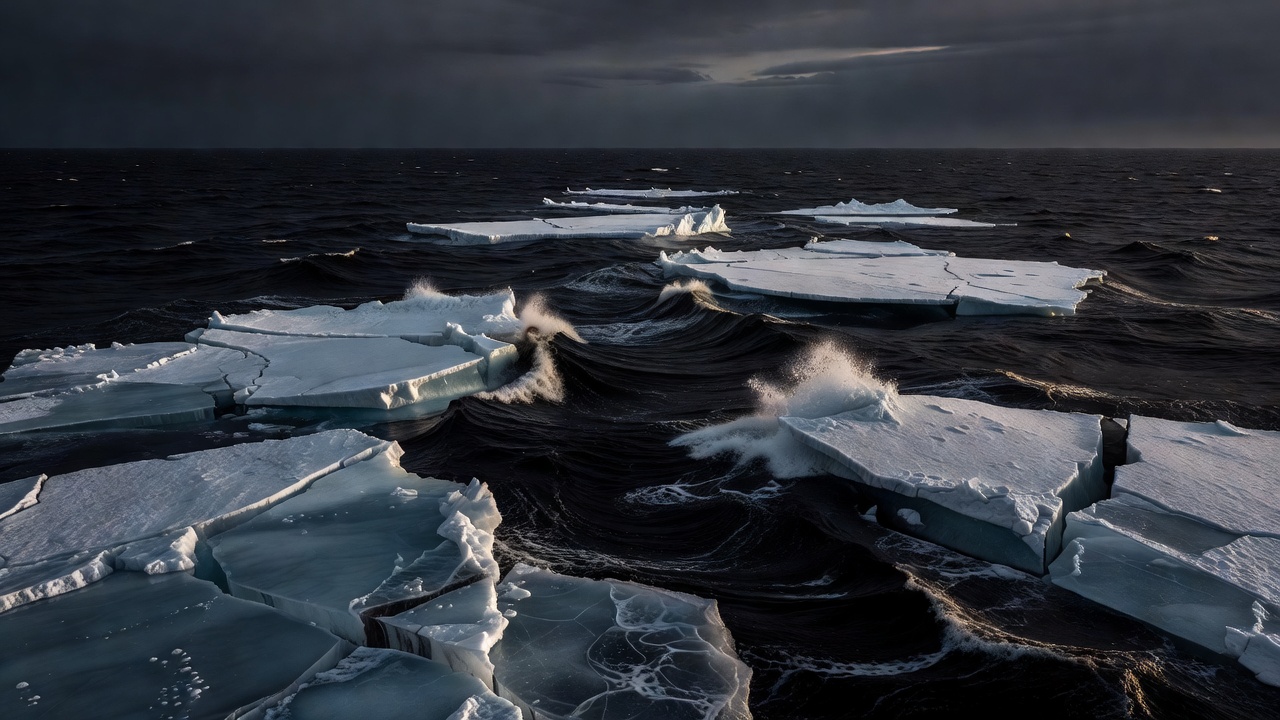
In early 1915, before reaching the intended landing site at Vahsel Bay, the Endurance became trapped in the dense pack ice of the Weddell Sea. For months, the ship drifted with the ice floes. As the Antarctic spring approached, the shifting of the massive ice blocks created immense pressure against the hull. The ship was slowly squeezed and crushed over several weeks.
By late October 1915, the structural integrity failed entirely. Water poured in, and Shackleton ordered the ship abandoned. On November 21, 1915, the shattered remains of the Endurance finally slipped beneath the ice, leaving the crew stranded.
The 2022 Discovery
The location of the wreck remained theoretical for 107 years. Locating it presented unique challenges: the Weddell Sea is still heavily choked with sea ice, and the depths exceed 3,000 meters. In March 2022, the Endurance22 expedition, organized by the Falklands Maritime Heritage Trust, deployed advanced Sabertooth autonomous underwater vehicles (AUVs) to scan the seabed based on navigational coordinates recorded by the ship's captain, Frank Worsley.
The wreck was discovered in astonishingly pristine condition. The freezing, oxygen-depleted waters of the Weddell Sea, combined with the total absence of wood-eating marine organisms (such as shipworms, which cannot survive in the Antarctic deep), halted the decay process. The ship sits upright, the ship's wheel remains intact, and the word "ENDURANCE" is still clearly visible across the stern. It is currently protected as a Historic Site and Monument under the Antarctic Treaty System.